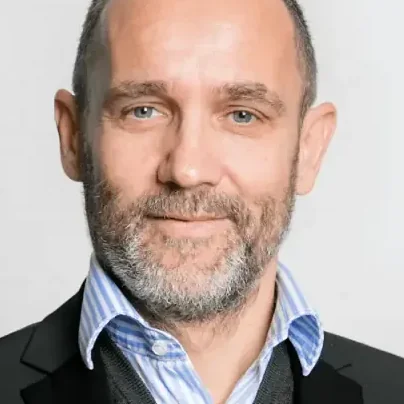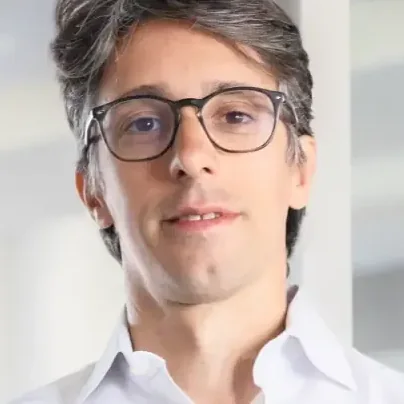
Giovanni Daprà is co-founder and chief executive of Moneyfarm, the digital wealth manager that builds portfolios of exchange-traded funds for savers in Italy and the UK. A Milan native who watched the financial system peak and crash from a Deutsche Bank trading floor, he left banking to start Moneyfarm in 2011 with his former classmate Paolo Galvani.
From Bocconi to the Trading Floor
He grew up in Milan and earned a master of science in finance at Bocconi University, followed by a master's in quantitative finance at Cass Business School, now Bayes Business School, in London. He then spent five years in the global markets division of Deutsche Bank in London.
The timing gave him a front-row seat. "I went from the high point in 2005 to the crisis in 2008-2009, and I saw the entire trajectory," he said in 2012. He concluded that the system had not changed in twenty years and would not last much longer in its existing form.
Founding Moneyfarm
In 2011, at 28, he left Deutsche Bank and founded Moneyfarm with Galvani and Andrea Scarso, licensed by the Italian regulator CONSOB and the Bank of Italy. "The idea is to democratize the savings industry, eliminating the role of distribution," he said. In Italy most savings were sold through bank branches, and he believed it was hard for banks to work in the client's interest. Moneyfarm recommended low-cost ETFs, which, he noted, banks rarely advised because of their low fees.
The start was small. A year in, Moneyfarm had about 150 investors, around €15 million under advice and ten staff, with a target of 60,000 investors in five years. The economist Nouriel Roubini, another Bocconi graduate, supported the team on its investment process.
A Robo-Adviser With People
By 2016 the business was known as a robo-adviser and had launched in the UK. Its software profiles a saver's appetite for risk through a questionnaire and matches them to one of a range of portfolios. The founders learned along the way that most people were not ready for a purely digital service, so Moneyfarm added access to human consultants, an approach the company compared to airlines selling online while travel agents survived.
He left a bank because he thought the way it sold savings could not last. Fifteen years later he runs the alternative he proposed at 28, still built on the idea he set out in his first interview: take out the middle layer and let the saver keep more.