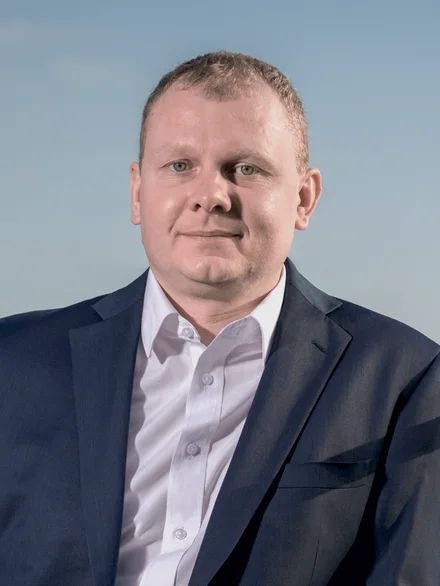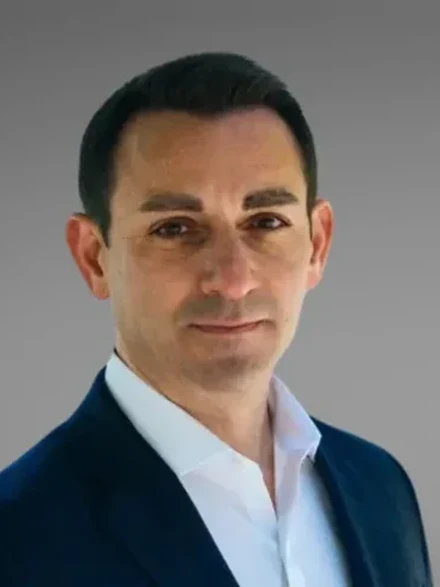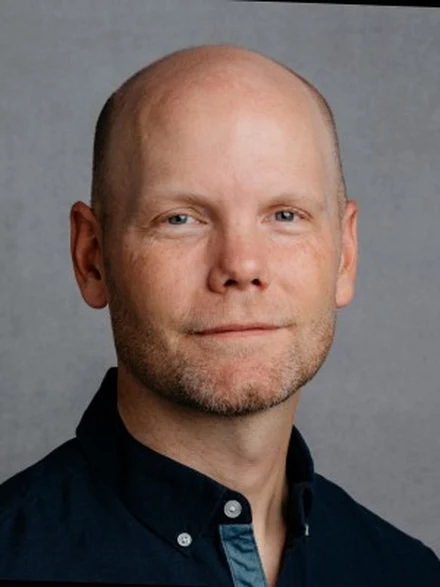
Andrew Bud is founder and chief executive of iProov, the London, England, company whose face verification technology checks that the person in front of a phone or laptop camera is real and present, and not a photo, a mask or a deepfake. An engineer who spent nearly 30 years in mobile communications, he built mBlox into the world's largest business text-messaging company before a fraud scandal there convinced him that the internet needed better ways to prove who people are.
From Fusion Research to Olivetti
He started out in engineering and nuclear fusion research before moving into the young mobile industry. At Olivetti in Italy he helped pioneer mobile communications, founding the company's wireless LAN business and contributing to DECT, the European standard for digital cordless phones that is still in millions of homes. He is a Chartered Engineer and a Fellow of both the Institution of Engineering and Technology and the Royal Academy of Engineering.
Building mBlox
He founded mBlox at the turn of the millennium and led it from 2000 to 2010, first as chief executive and then as executive chairman. mBlox carried the text messages that companies send to customers, such as alerts, codes and marketing, and it also cleared mobile payments, the small charges that appeared on phone bills when people bought ringtones or voted on TV shows. By the time he stepped back it processed four billion transactions a year, had revenues of more than £75 million and cleared about £386 million of payments annually. It was sold in 2016 for £90.4 million.
The Fraud That Led to iProov
In 2008 fraudsters in the UK worked out how to fake consumers' consent to mobile payments, and many people lost money through charges that went through mBlox. The press held the company responsible. "My feet were held to the fire by the press, which gave me the salutary choice of admitting to complicity or negligence!" he has said. The regulator later commended mBlox for how it handled the incident, but the episode stayed with him. He concluded that strong authentication had to be simple enough for impatient mobile users and secure enough for the most determined attackers, and that nothing on the market did both. "There wasn't anything adequate on the market capable of delivering this, so I just had to invent the solution."
Founding iProov
He founded iProov in 2011. Its answer was face verification that also proves liveness: during a short selfie, the screen flashes a sequence of colours, and the way that light reflects off a real face shows that a living person is there, which defeats photos, replayed video and synthetic faces. Funding a company whose revenue lay at the end of years of research was hard. iProov won £1.4 million in Innovate UK grants from 2013, raised money from private investors using the UK's EIS tax relief, and found backers through the Goldman Sachs Disruptive Technology Symposium.
He chose to chase large, well-known customers, even though that made sales slower and delayed revenue, and the bet paid off with clients such as the US Department of Homeland Security, the Dutch bank ING and the UK Home Office. The hardest part, he has said, was waiting for buyers to understand that "genuine presence" matters: face matching had existed for years, but few people worried about fakes until deepfakes made the threat obvious. Now, he points out, some of the smartest people in the world, in state intelligence services and criminal gangs, are working against iProov's technology.
Honours and Advice
In 2020 he was made a CBE for services to export. His advice to founders is to start with a big problem, since a pitch built on saving customers 20% of some cost "leads straight to failure," and to guard cash, because finding the right problem always takes longer than expected. "You'll be astonished how many problems there are and how hard large incumbents find it to address them," he has said.
In 2008 his company took the blame for payments that real people had never approved. The business he built afterwards sells one test, whether a real person is there right now, and the engineer who learned the cost of failing it on his own watch has spent the years since building the proof he wished mBlox had.